

Postfix
Recognises smtpd events with log_type: postfix and postscreen events with service: postscreen, including mailcow’s Docker logs. Tested against captured crowdsecurity/postscreen-rbl, crowdsecurity/postfix-spam and crowdsecurity/postfix-non-smtp-command alerts.
Evidence
Section titled “Evidence”A postscreen alert opens with an explanation of the recorded violation and what the client sent. PREGREET appears as Sent before greeting: the client sent data before the server finished its SMTP greeting. The scenario name postscreen-rbl does not establish a blocklist match; the retained events record early client input.
An smtpd alert shows the disconnect stage and non-SMTP input when relevant. CONNECT means the connection ended before an SMTP command was recorded; UNKNOWN means it ended after a command Postfix did not recognise. The spam-attempt category includes lost connections and authentication failures, so the UI describes the recorded behavior without assuming a message was sent.
HTTP requests are labeled HTTP request sent to the mail server. Bytes with a TLS handshake prefix show Looks like a TLS handshake. The prefix suggests TLS but not which version was negotiated. The logged bytes stay visible. A newline-only greeting shows Line break without an SMTP command.
Client payloads and disconnect stages summarise the whole alert and cannot be paired with individual events. Missing values show Not recorded. One line per retained event shows its violation, action or category, with the service, reason, client hostname and timestamp when available. The list counts SMTP events rather than assuming each log record is a separate connection.
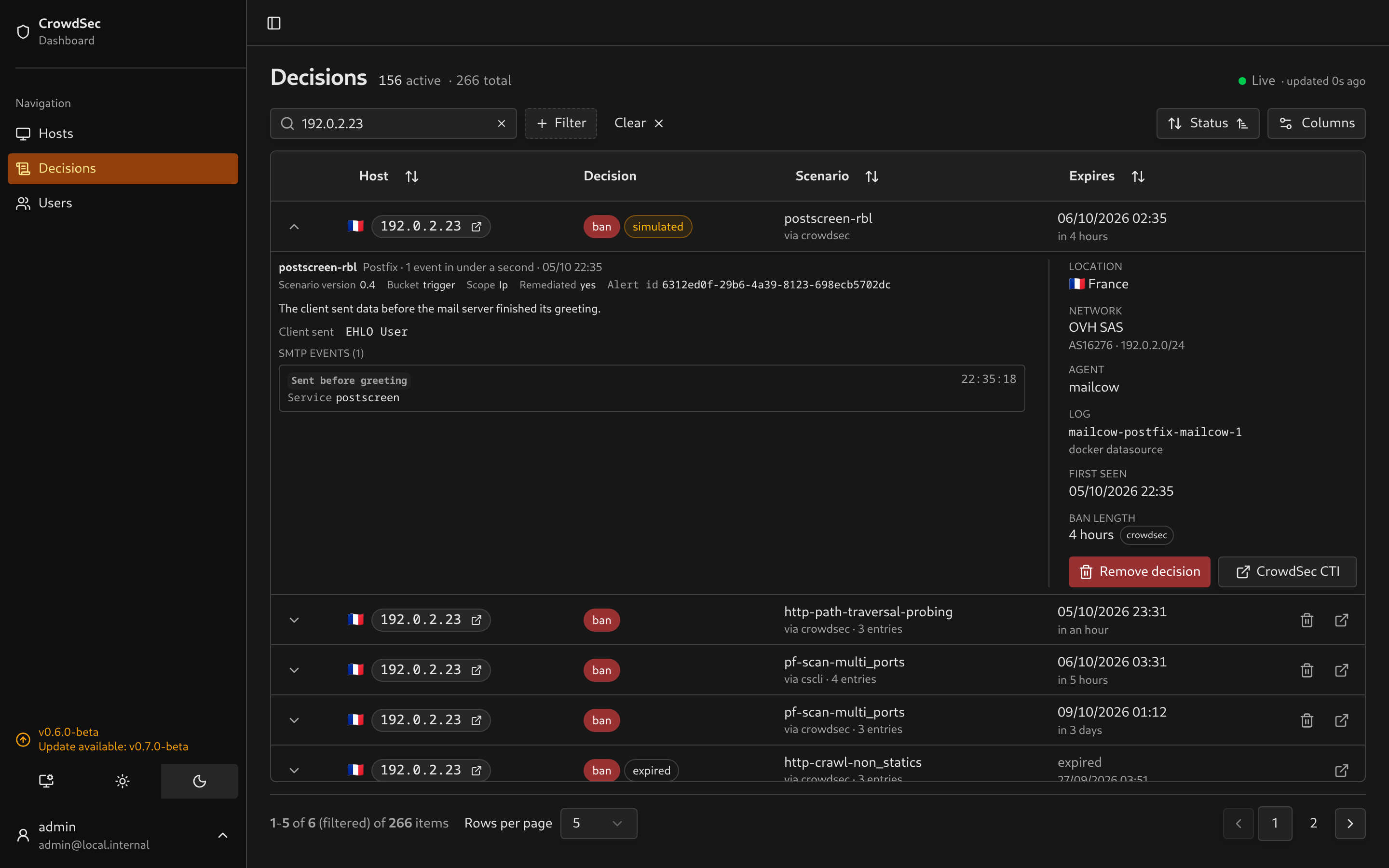 |
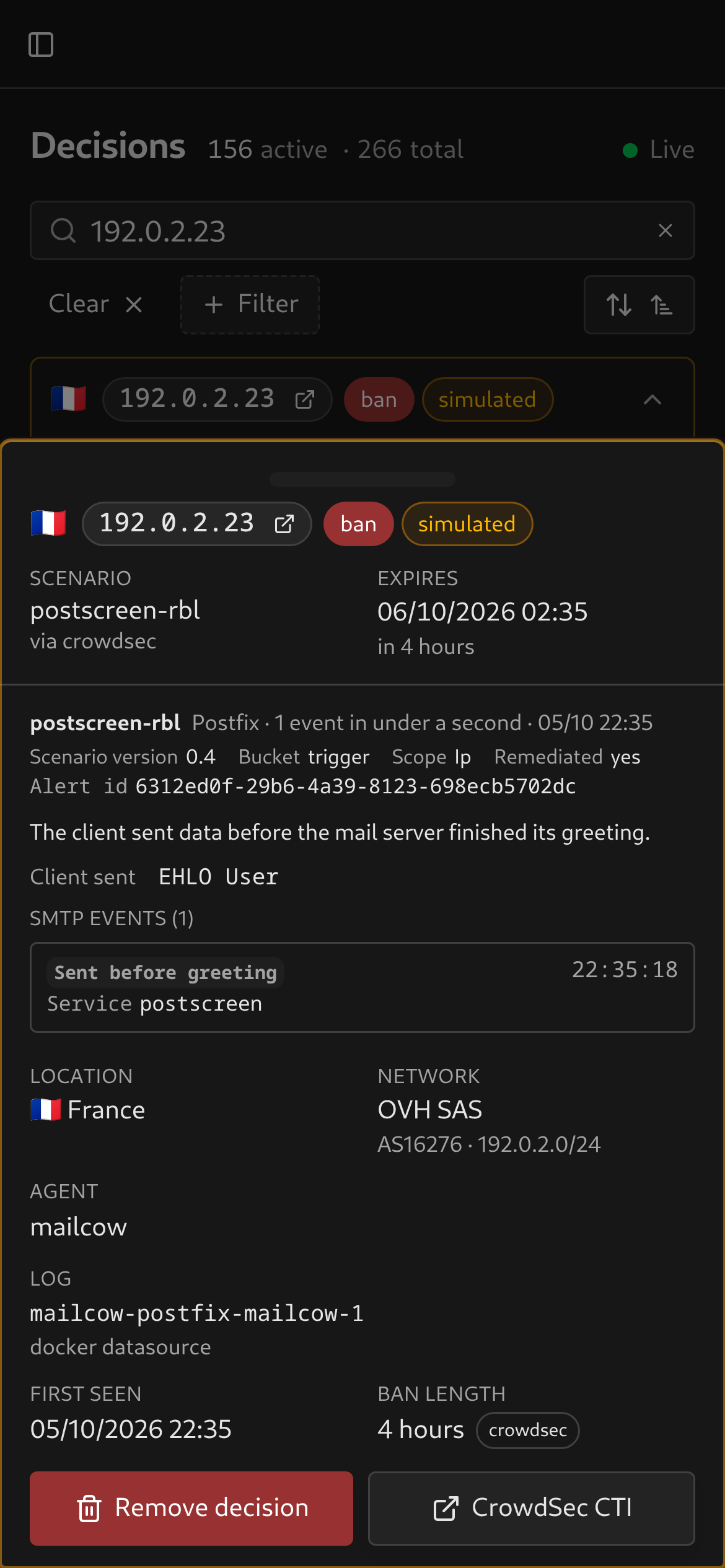 |
The container appears in the facts column.
The captured postscreen alert carries PREGREET, service: postscreen and a container ID, alongside shared timestamp, source and location metadata. It has no RBL name or rejection reason. The scenario name alone does not establish which blocklist, if any, matched.
Captured smtpd events carry spam-attempt or non-smtp-command categories and a client hostname. Action and reason are supported when supplied, but are absent from these captures. There are no target chips or entry counts for mail connections. Postfix does not log the username of a failed SASL login; on mailcow, Dovecot handles authentication and reports the mailboxes tried.
Alert-context configuration
Section titled “Alert-context configuration”CrowdSec’s Postfix and postscreen parsers read what the client sent from each log line, but do not include it in the alert. Without alert context the dashboard shows Not recorded for these values.
Add a context file on the CrowdSec agent that reads the Postfix logs, for example /etc/crowdsec/contexts/postfix.yaml:
context: client_sent: - evt.Parsed.message_attempt # postscreen: sent before the greeting lost_after: - evt.Parsed.smtp_response # smtpd: the stage it hung up at, e.g. AUTH smtp_command: - evt.Parsed.command # smtpd: a non-SMTP line, e.g. GET / HTTP/1.1Restart CrowdSec to load it. Only alerts raised after the change carry these values. See CrowdSec’s alert context for the file format.
Configure CrowdSec to collect Postfix logs and give the dashboard watcher credentials. Existing stored alerts are parsed again when expanded. Mailcow authentication events are covered by Dovecot.
The screenshots use sanitized captured metadata with demo addresses and shifted timestamps.